


From merge to result, on its own
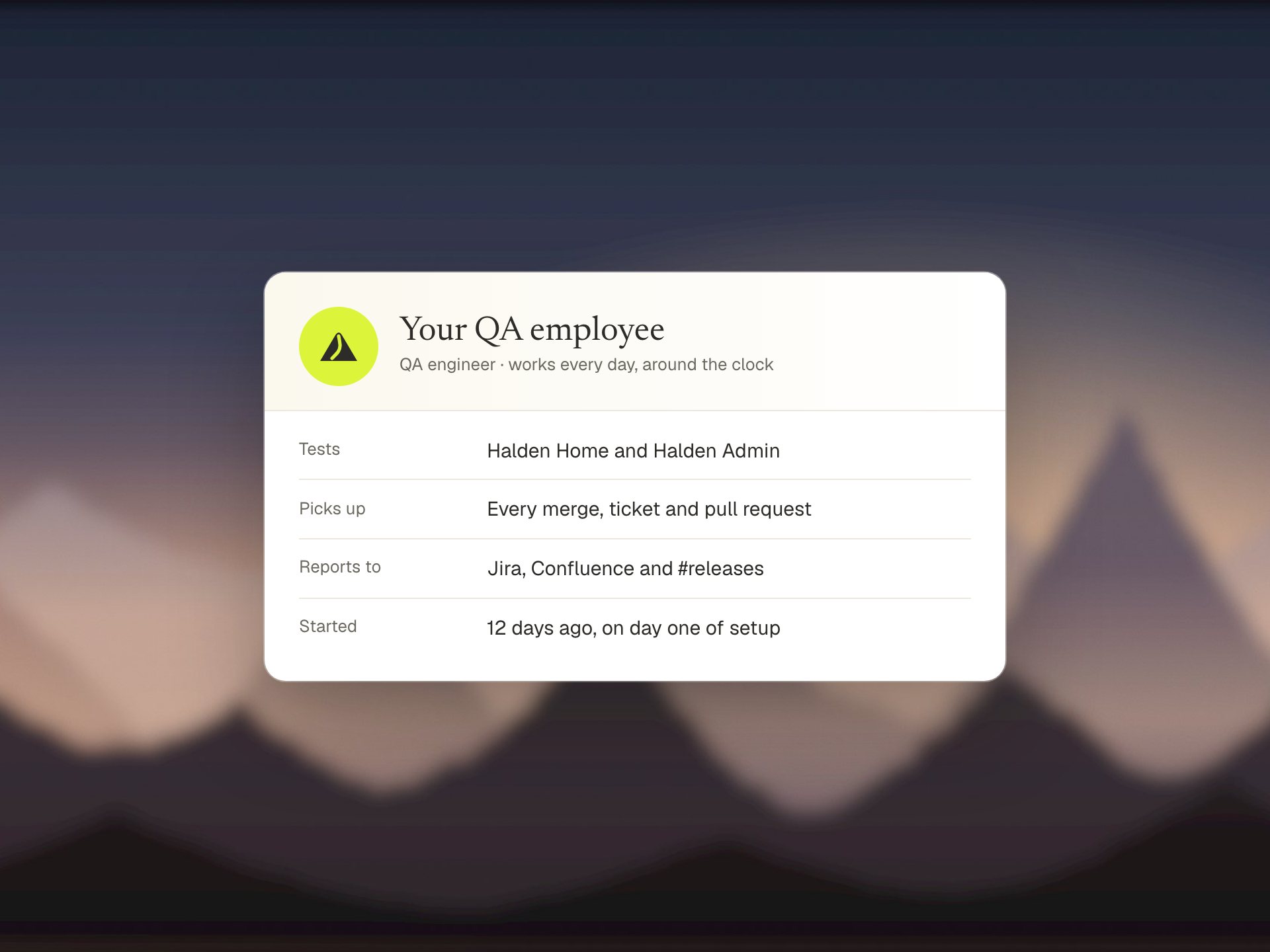
Your AI QA employee does the whole job on its own. It picks up the change, sets up a clean test, tests it like a careful tester and reports back to your team.
What happens after a merge
A change is merged
Or someone starts a run for a branch, ticket, pull request or scenario.
Picked up and built
Every 30 minutes it pulls the latest code, builds it once and finds new merges.
Both halves are in
If only the frontend or the backend of a feature is in, it waits for the other half, up to 72 hours.
Its own copy of your app
It reserves a private copy of your app, built from the exact commit.
Reads up on the change
The code change, the ticket text, the explainer video transcript and any earlier report for the same ticket.
A fresh test account
It creates a new company and user, then writes a test script, reusing steps it already knows.
Tested and repaired
The script runs. If it crashes, it fixes the script and runs it again, up to four times.
Written up
A report with screenshots, results in your test manager, and a short narrated video.
Shared with your team
The report goes to your docs, the evidence links go on the ticket and a short summary goes to your team chat. The people who made the change are copied in, and mentioned when it finds a problem.
It tries to break the feature
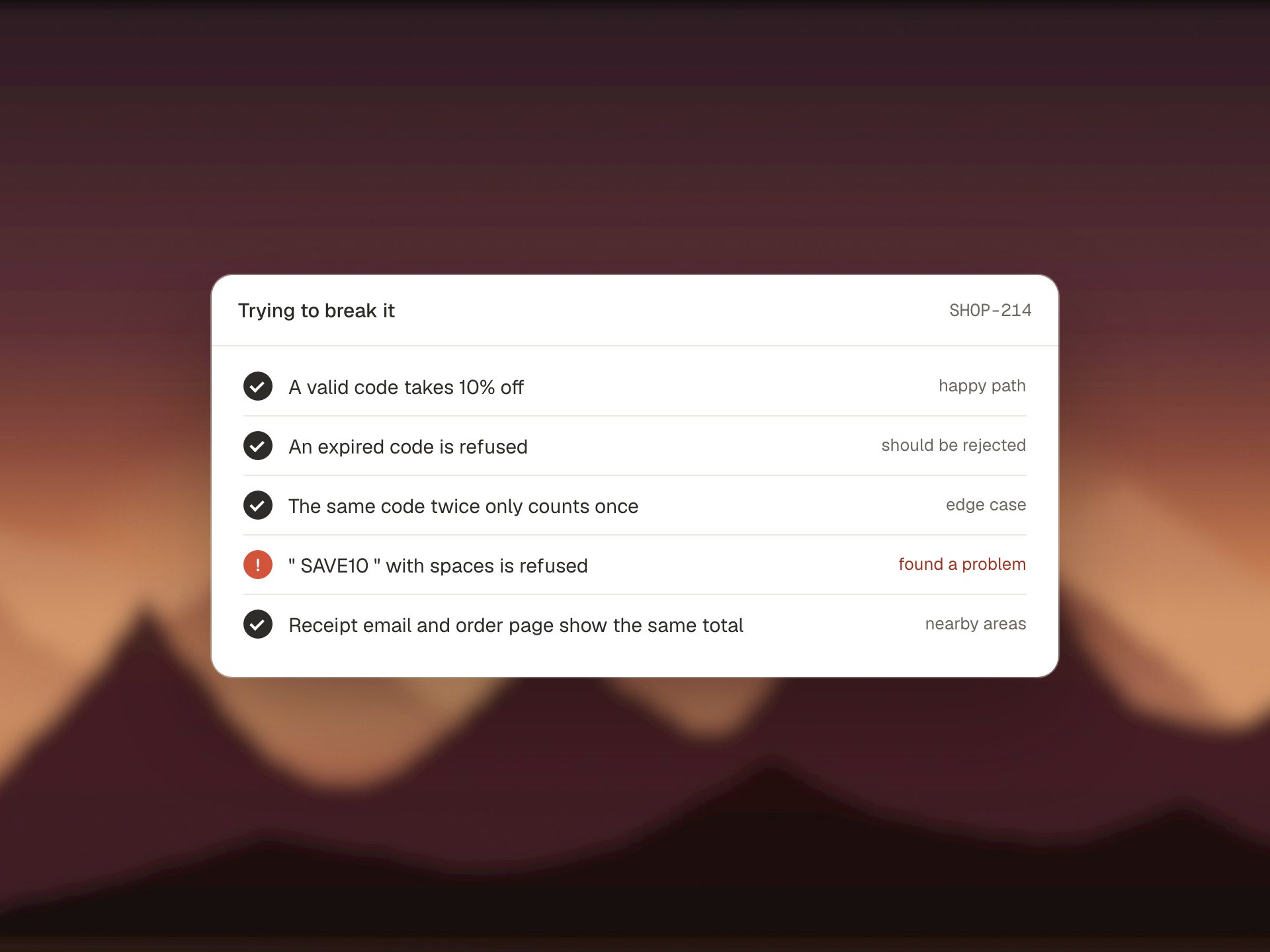
It follows a written testing approach: the happy path, real world data, data that should be rejected, and the areas around the change that could have broken. It checks every place your app shows the same information, and reports side errors even when the change works as described.
- Acceptance criteria from the ticket
- Two or three nearby areas checked for regressions
- Console errors, failed requests and untranslated text reported
A staging app and access to your tools
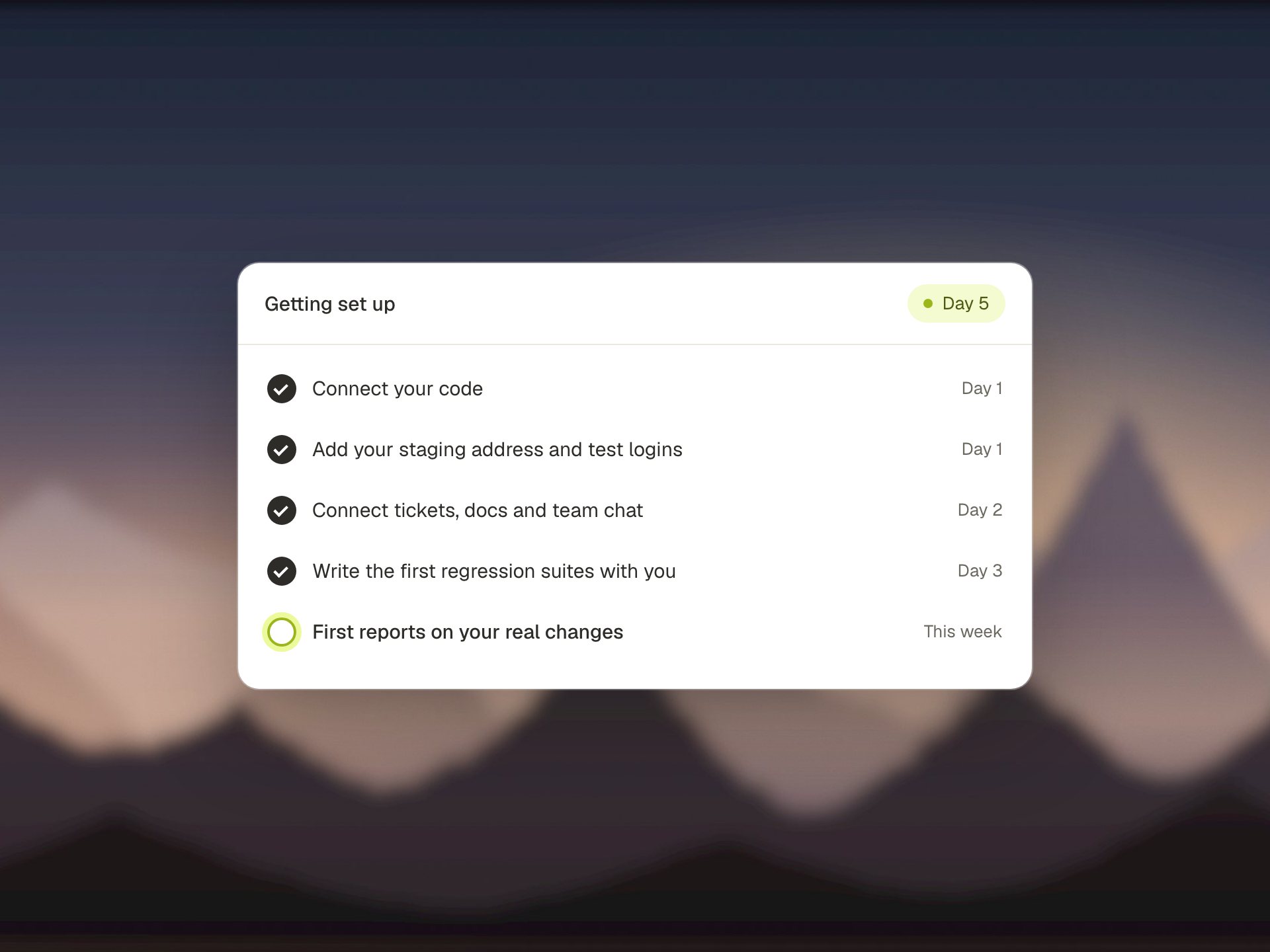
You give it your repositories, a staging or test environment, and access to your tickets, docs and team chat. During founding customer setup we connect everything with you.
- Code on Bitbucket, GitHub, GitLab or Azure Repos
- Tickets in Jira, Linear and many more
- An API key from Anthropic, OpenAI or Google
You build the product.
Your QA employee checks it.
Show us your app. We'll run GreatQA on a real change of yours, live on the call.